You have a check, but you can’t cash it
The check is made out to you, but you can’t be the one to turn it into money. Maybe your bank is across town and you’re working double shifts, maybe your ID is expired, maybe you don’t have an account anywhere that will take it without a long hold. In the moment, signing it over to someone you trust feels like the clean fix.
That’s where reality bites: a lot of banks treat third-party checks as high-risk, even when nothing shady is going on. The teller might say they won’t accept it at all, or they’ll accept it but place a hold that makes the whole handoff pointless. Some will ask for both of you to show up together, which defeats the reason you’re doing this.
Before you put pen to paper, it helps to treat this like a decision with friction: time, fees, and the chance of a flat “no” at the counter.
Confirm the bank will accept a third-party check
Call the bank that’s actually going to take the deposit—don’t assume your bank’s rules matter if the other person is using theirs. Ask one specific question: “Will you accept a check payable to me if I endorse it to someone else to deposit into their account?” Get the conditions too, because “yes” often comes with timing and hoops.
Some banks only do it if both people are present with ID, or only if the check is drawn on that same bank. Others will take it but treat it like a slow-moving item: a longer hold, a case-by-case approval, or a hard “teller discretion” at the window. That’s when the trip and the wait become the real cost.
Also ask whether it can be deposited by mobile app or ATM. A lot of third-party checks go through the scan just fine—then get rejected later, after you’ve already handed it off.
Endorse it correctly in the right order
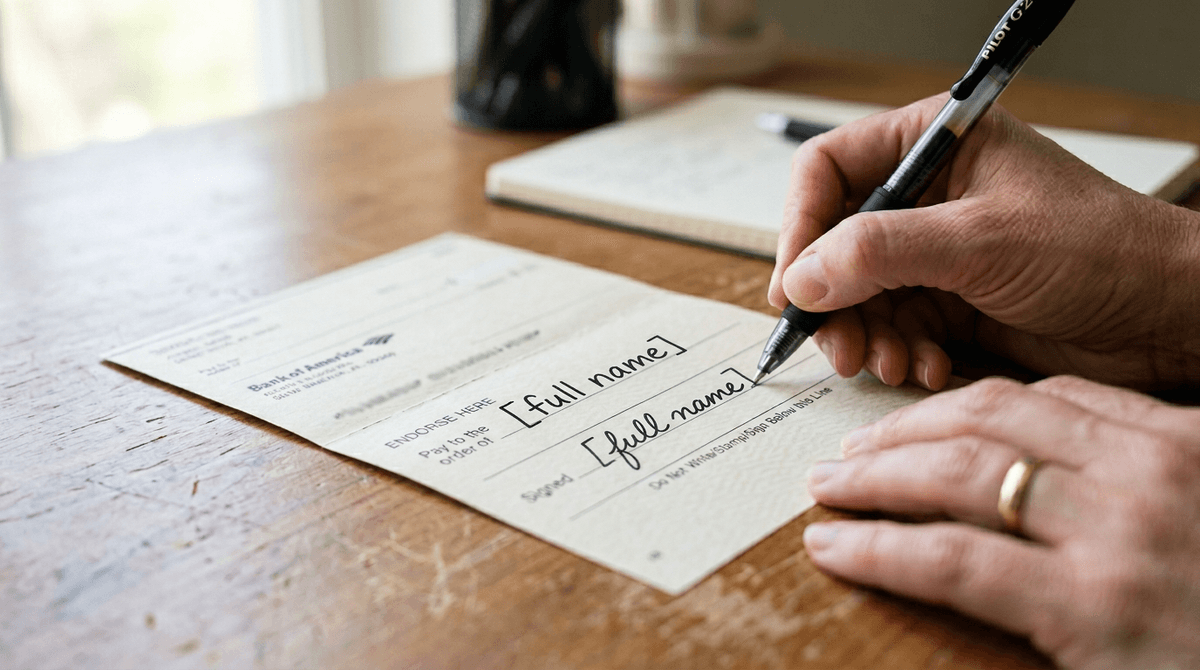
If they say they’ll take it, the next failure point is messy ink. The endorsement has to read like a clean chain of ownership, not a jumble of names. Flip the check over and stay inside the endorsement box. Write “Pay to the order of [their full name]” on the first line, then sign your name underneath exactly how it’s printed on the front.
After that, stop. Don’t add their signature for them, don’t write extra notes, and don’t sign it again in a different spot. The person you’re handing it to endorses after you, usually below your signature (or wherever their bank tells them), right before deposit. If the bank wants both of you present, they may also want to see your ID when you sign.
If you already signed it earlier “just in case,” expect friction. Some tellers treat a crossed-out or reworked endorsement as a fraud flag and will refuse it or put a long hold on it.
Add restrictions to reduce misuse if lost
Once you’ve written “Pay to the order of…” and signed, it’s effectively transferable. If it gets left in a car, dropped in a hallway, or pulled out of an unsealed envelope, the wrong person can try their luck. You can’t make it “safe,” but you can make it less usable.
The usual move is adding a restrictive endorsement like “For deposit only to the account of [their full name]” and, if you know it, the last four digits of their account number. Some banks want that restriction written by the person depositing it, but adding it while you’re there tends to reduce the chance it gets cashed at a window. The trade-off is practical: if their bank decides it needs to be deposited a different way (ATM vs. teller vs. mobile), that extra line can trigger a rejection and a do-over.
Use permanent ink, keep it inside the endorsement area, and don’t add “cash” language anywhere. If you’re mailing or dropping it off, treat the delivery as part of the risk—tracked envelope costs a few dollars, but it’s cheaper than a lost check and a stop-payment scramble.
Handing it over creates a new limitation

After you hand it over, the check becomes their problem in a way that can trap both of you. If their bank puts a hold on a third-party check, they may not get access to the money for several business days, and they can’t “speed it up” by taking it somewhere else without starting over. If they already needed the funds for rent due tomorrow or a late utility bill, that timing mismatch turns into fees fast.
There’s also a control issue you don’t get back. If the check gets rejected after deposit (endorsement doesn’t match, check image can’t be read, bank policy changes at the teller line), the bank usually gives it back to the depositor—not you. Now you’re waiting on them to return a piece of paper that’s already been marked up, maybe stamped, and sometimes harder for the next bank to accept.
And if anything goes sideways—lost on the way to the bank, stolen before deposit, or disputed by the issuer—you’re the payee on the front, but you’re not holding the item anymore. Replacing it can mean a stop-payment request, a reissue delay, and an awkward conversation with the person you trusted to handle it carefully.
Alternatives when endorsement won’t work in practice
Sometimes the cleanest answer is: don’t endorse it at all. If you can get the check into an account in your name—even a basic online account—you can then send the money by bank transfer, Zelle, or a card-to-card move. That route can still mean a hold, but at least the check stays tied to you instead of bouncing between two people and two banks.
If timing is the issue, try the bank the check is drawn on. They’re more likely to cash it with proper ID, though they may charge a non-customer fee or refuse if the account looks risky. A check-cashing place is another option when rent is due tomorrow, but the fee can be painful, and they may want extra verification for payroll or larger amounts.
When none of that works, ask the issuer to reissue it correctly (to your spouse, to both names, or to your new bank). It’s slower, but it avoids a rejected third-party deposit and the stop-payment mess.
Avoid mistakes that trigger fraud flags or disputes
Most third-party checks don’t fail because the idea was wrong—they fail because they look “worked.” Don’t scratch out names, don’t overwrite a signature, and don’t try to “fix” a bad endorsement with arrows or initials. If you made a mistake, ask the bank first; sometimes the only workable path is getting the issuer to reissue the check.
Keep the handoff clean, too. Don’t let the other person deposit it weeks later, don’t split it between cash back and deposit, and don’t run it through mobile deposit if the bank said teller-only. If the check is returned or disputed, get a copy of the deposit receipt and any return notice right away—waiting turns a simple hold into an argument about who did what and when.